
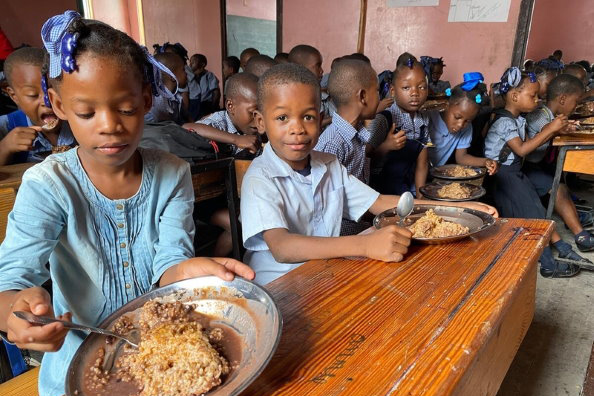
The COVID-19 pandemic risks reversing a decade of hard-won gains in global efforts to provide nutritious food to the world’s most vulnerable children through a free daily meal in school. One in two schoolchildren, or 388 million children worldwide, were receiving school meals when the pandemic struck, the highest number in history, according to the State of School Feeding Worldwide report. By April 2020, 199 countries had closed their schools and 370 million children were suddenly deprived of what for many was their only nutritious meal of the day.
Children
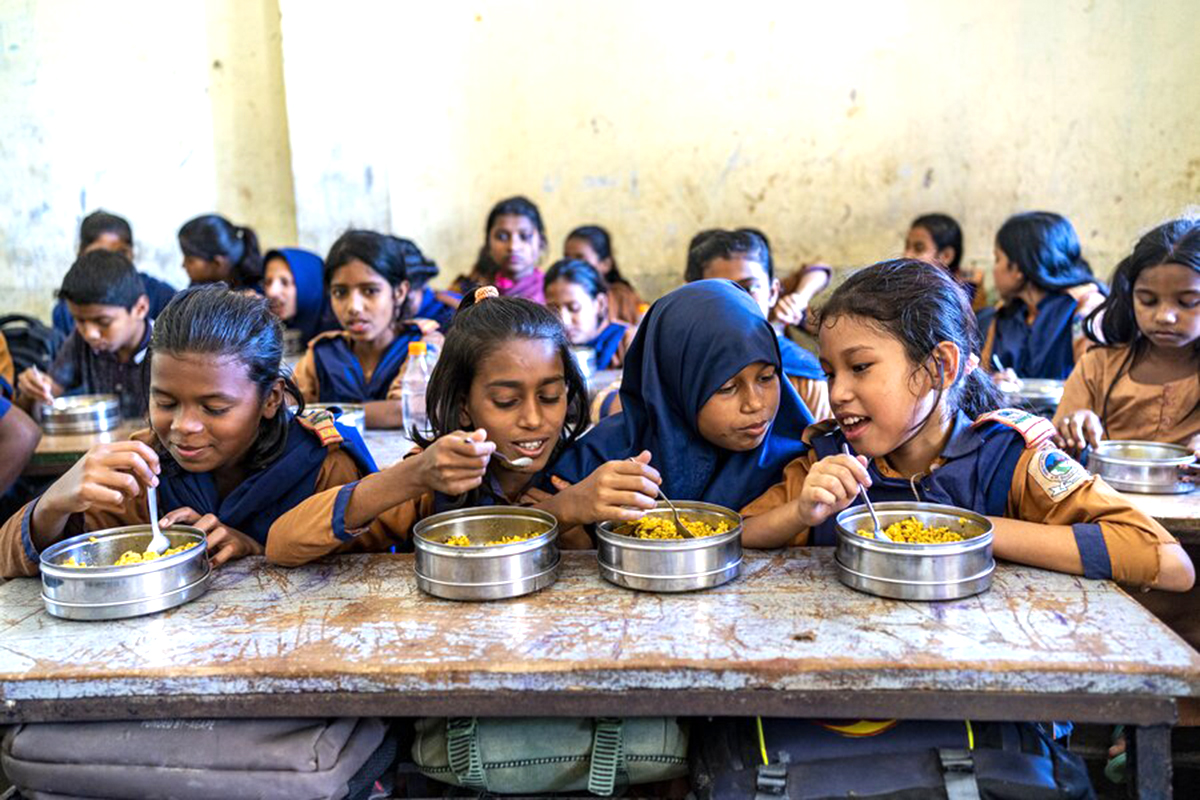
Better health and nutrition allow children to learn and perform better, broadening their educational opportunities. School feeding empowers girls by dissuading parents from marrying them off early, acts as an incentive for families to enrol and keep children in school, relieves parents from having to budget for lunches. The WFP strategy (2020 – 2030) lays out its vision of working with governments and partners to jointly ensure that all primary schoolchildren have access to good quality meals in school, accompanied by a broader integrated package of health and nutrition services.
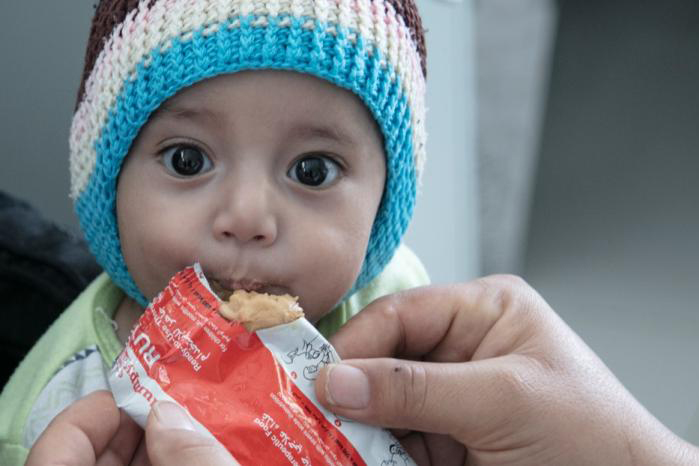
Nearly 2.3 million children under the age of five in Yemen are projected to suffer from acute malnutrition in 2021, four United Nations agencies have warned. Of these, 400,000 are expected to suffer from severe acute malnutrition and could die if they do not receive urgent treatment. The agencies also warned that these were among the highest levels of severe acute malnutrition recorded in Yemen since the escalation of conflict in 2015. Malnutrition damages a child’s physical and cognitive development, especially during the first two years of a child’s life. It is largely irreversible, perpetuating illness, poverty and inequality. The humanitarian response remains critically underfunded.

In this year’s open letter, UNICEF Executive Director Henrietta Fore explains how we can reimagine a better post-COVID world for every child. COVID-19 is the first truly global crisis we have seen in our lifetime. No matter where we live, the pandemic affects every person – children most of all. The world needs to rally behind a plan to protect our children – a promise from our generation to the next to invest in health and education, build more resilient systems and services that can reach all children, and ensure that budget cuts and economic downturns do not harm them.
As climate and commercial threats intensify, a new WHO-UNICEF-Lancet Commission calls for a radical rethink on child and adolescent health. The report, "A Future for the World’s Chil
The Music Against Child Labour Initiative launches a global competition for the UN International Year for the Elimination of Child Labour 2021.
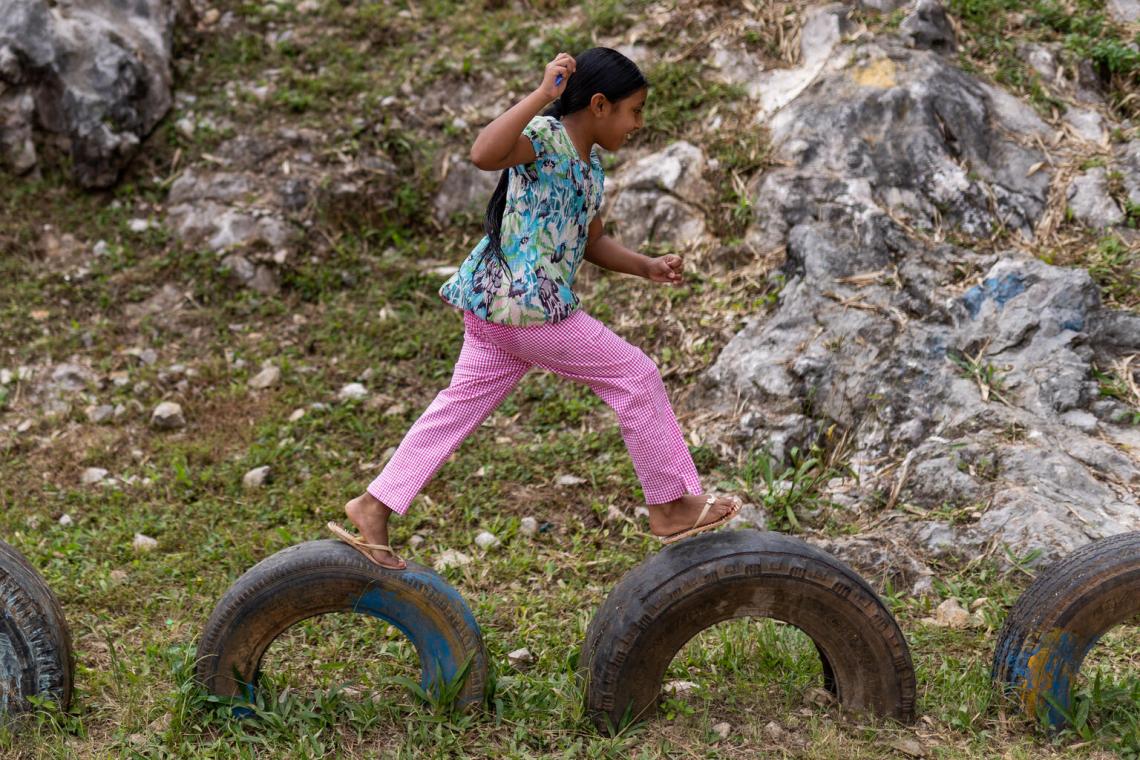
Juana plays outside at a shelter in Campur in Alta Verapaz, Guatemala. Juana is one of more than 900,000 children in Guatemala affected by the two hurricanes, which struck in quick succession and left landslides and massive flooding across the region. UNICEF has been working with the government, which has been developing a strategy for the opening of safe spaces—a challenge complicated by the ongoing risk of COVID-19. The strategy includes training volunteers on ‘Return to Joy’, a play-based approach culturally adapted to each community that uses child-to-child techniques to help children cope with upheaval.
Musicians around the world are joining ILO’s Music Against Child Labour Initiative to join the fight for a better future by dedicating concerts and songs to raise awareness and drive change.
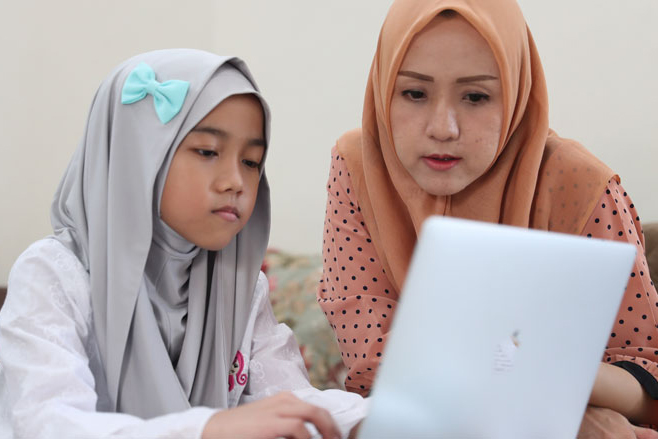
COVID-19 is wreaking havoc on the lives of young children, students, and youth. Even before COVID-19 hit, the world was experiencing a learning crisis. 258 million children of primary- and secondary-school age were out of school. The COVID-19 pandemic has exacerbated the learning crisis, and the impact on the human capital of this generation of learners is likely to be long-lasting. And the unique nature of the pandemic places parents as first-line responders for children’s survival, care, and learning. This places a burden on all families, especially the most vulnerable. The World Bank is supporting COVID-19 response investments in 62 countries, covering the entire cycle from early childhood to higher education.

As the calendar turns to 2021, UNICEF is again celebrating the new lives being brought into the world on 1 January. Fiji in the Pacific will welcome 2021’s first baby. An estimated 371,504 babies will be born around the world on New Year’s Day, and an estimated 140 million children will be born in 2021, according to UNICEF. Newborns and their parents face additional challenges this year from the COVID-19 pandemic. In response to the global pandemic, UNICEF launched the Reimagine campaign, a global effort to prevent the COVID-19 pandemic from becoming a lasting crisis for children.
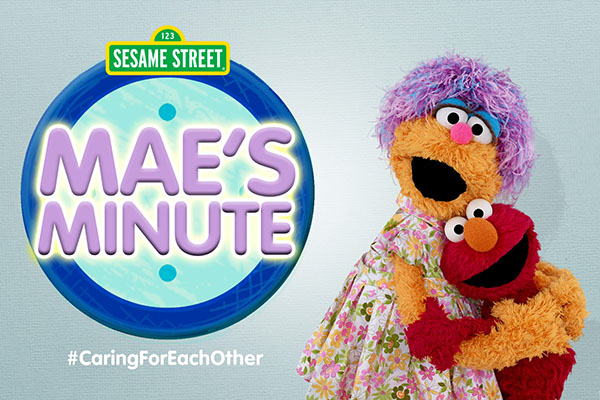
UNICEF has teamed up with beloved Sesame Street character Elmo and his mom to help parents and caregivers through the COVID-19 pandemic.